Toning vs Cleaning Damage on Silver Coins: How to Tell Them Apart
Catalog values, history, and authentication — coin toning.
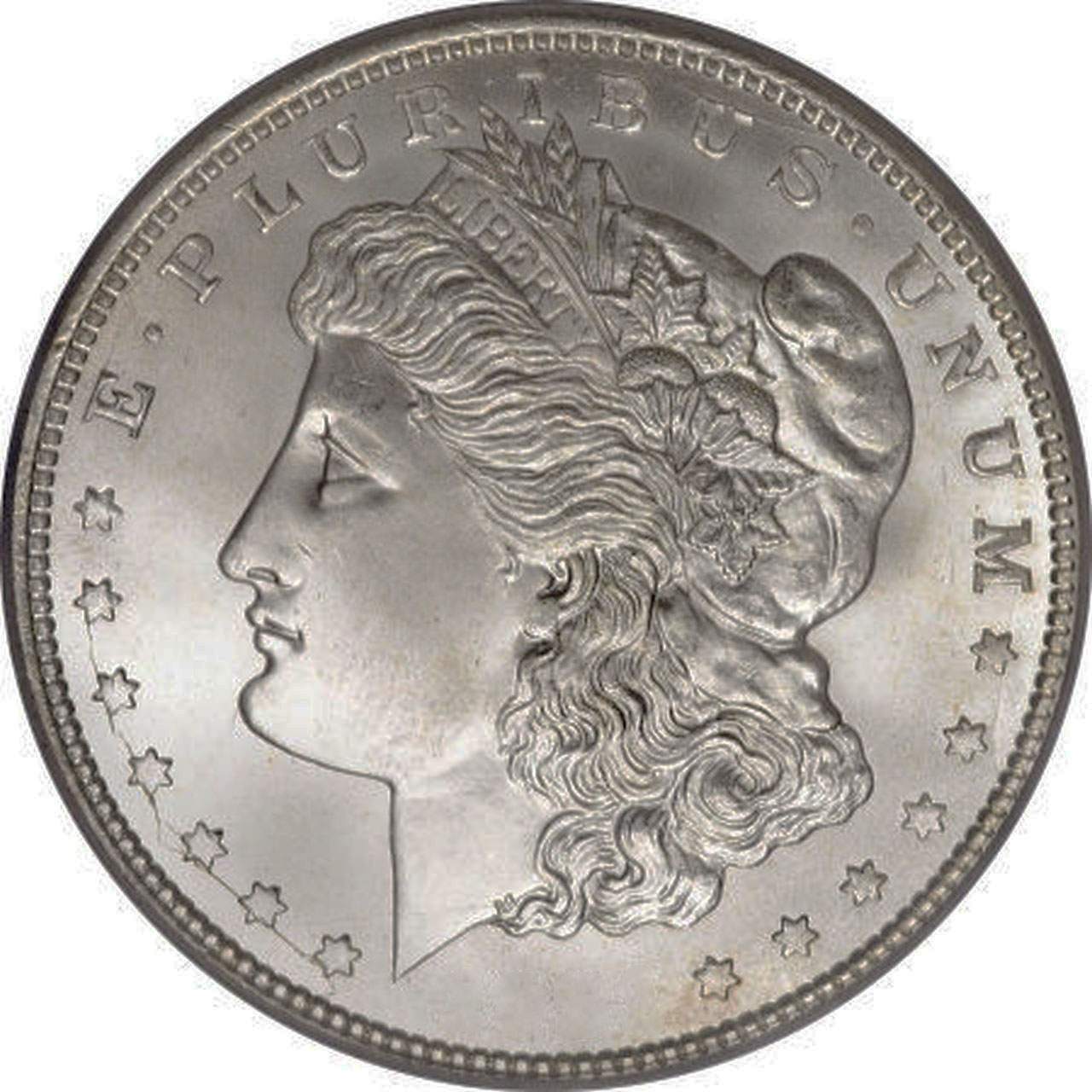
Natural toning on a Morgan Silver Dollarcan push its value several times above a common example in the same grade. Cleaning the same coin can cut that value by 80% or more. The two surfaces can look superficially similar to an untrained eye — both involve color that isn't brilliant white silver — but under the right light they are unmistakably different. This guide gives you five practical visual tests you can apply before buying, selling, or sending a coin to a grading service.
The same principles apply across the classic silver series: Peace Dollars, Walking Liberty Half Dollars, and Mercury Dimes all develop toning in the same way, and all suffer the same grading penalties when cleaned.
What toning actually is
Toning is a chemical reaction between the silver surface and sulfur compounds in the environment. The primary culprits are sulfur-bearing materials that have historically surrounded stored coins: paper coin envelopes, cardboard albums, leather pouches, rubber bands, and even the wood of old storage cabinets. Over decades, silver sulfide builds up on the surface in layers thin enough to act as an optical interference film — the same physics that creates color in a soap bubble. Thin layers appear gold or yellow; thicker layers progress through red, blue, and eventually deep purple or black. This is why "rainbow toning" on a silver dollar stored in an old album can show a full spectrum across its face.
Crucially, toning grows on top of the original mint luster. It does not destroy it. A heavily toned coin in an NGC or PCGS holder can still show full cartwheel luster when tilted under a single light source, because the microscopic flow lines left by the mint press are intact beneath the toning layer.
What cleaning damage is
Cleaning refers to any abrasive or chemical treatment applied to a coin to make it look brighter or more valuable. The most common types are:
- Whizzing — mechanical polishing with a wire brush or buffing wheel that removes the top layer of metal and produces a false sheen.
- Dipping — immersion in a commercial silver dip, typically an acidified thiourea solution (the technical term for most commercial silver dips), that strips toning along with a thin layer of silver.
- Wipe cleaning — rubbing with a cloth, tissue, or even a finger, which leaves hairline scratches across the fields.
All three methods destroy the original luster by leveling or scratching the microscopic flow-line structure. Once that surface is gone, it cannot be restored. A coin that has been harshly cleaned will carry a grading-service "details" or "cleaned" notation for its entire future life in a slab. For context, an NGC or PCGS "cleaned" designation typically reduces the coin's market value to a fraction of an equivalent genuine example — see our guide on why you should never clean a coin for the full picture.
Five visual differences
1. Color gradient
Natural toning fades smoothly and organically across the coin's surface. Because the sulfur exposure is uneven — stronger near the edge that touched an album page, weaker toward the center — the color transitions gradually, often in rings or abstract patches. Cleaning leaves abrupt, hard edges where the treatment stopped or where the coin was held. If you see a sharp boundary between one color zone and another that doesn't correspond to a design feature, that's a warning sign.
2. Underlying luster
Tilt the coin slowly under a single directional light source — a flashlight or a desk lamp works well. A toned but uncleaned coin will still show the characteristic cartwheel luster, a rotating bright band that sweeps around the coin as you tilt it. A cleaned coin's fields will look flat, dull, or artificially brilliant without that flowing luster. This is the single most reliable test and the one professional graders use first.
3. Hairlines under raking light
Hold the coin nearly parallel to a strong single light source — a "raking" angle — so the light skims across the fields. Hairlines from wipe cleaning show up as fine parallel or random scratches that catch the light. Natural toning leaves no hairlines; if anything, toning sitting in the scratches of an otherwise-cleaned coin can fill them in slightly and make an old cleaning look less obvious. Raking light reveals this too: the scratch channels look darker than the raised toning around them.
4. Color palette
Natural toning on silver produces a predictable progression of colors as the sulfide layer thickens: gold → orange → red-brown → blue → violet → grey-black. Rainbow toning shows multiple stages of this progression across different zones of the coin. Coins that have been dipped and then re-toned (artificially or by further storage) often show unnatural pinks, bright oranges, or uniform blotchy browns that don't fit the natural progression. Bright pink on a Morgan dollar field is almost always a sign of a chemical treatment.
5. Field reflectivity
On proof coins and well-struck business strikes, the flat fields are mirror-like or semi-reflective. Natural toning preserves that reflectivity because it is a translucent film; you can still see a reflection through gold or even light blue toning. Cleaning destroys reflectivity by physically altering the field surface. A proof coin that has been cleaned looks hazy or "milky" in the fields rather than mirror-sharp, even if it has been re-toned since cleaning.
What grading services do with toning
Both PCGS and NGC evaluate toning as part of the grading process and treat it differently depending on its type and quality.
NGC awards a Star designation (e.g., MS-64★) to coins with exceptional eye appeal — most commonly coins with dramatic, high-quality rainbow toning. NGC's published criteria require that a toned coin be considered attractively toned by all graders examining it, with toning that does not obscure luster and no areas of dark brown or black. A star-designated example typically commands a meaningful premium over the same grade without the star because the market treats premium toning as a positive attribute rather than a neutral one.
PCGS treats eye appeal — including toning — as one of the four components of grade for coins above MS/PR 60, using a published seven- level eye-appeal scale for toning that ranges from "Amazing" to "Ugly." Multicolored rainbow toning in a crescent or target pattern is generally treated favorably, while splotchy or deeply embedded toning is not, regardless of how original it may be.
Coins with cleaning damage — regardless of how attractive they may look to an untrained eye — receive a "details grade" from both services: a notation like "MS-64 Details — Cleaned" or simply "Cleaned" on an ungraded slab. These coins circulate in the market at significant discounts to problem-free examples. For tips on evaluating grade before submission, see how to grade a coin.
NCS: when conservation makes sense
NGC operates a conservation affiliate called NCS (Numismatic Conservation Services) that uses non-abrasive chemical rinses to remove foreign materials, residues, and certain contaminants — old tape residue, PVC haze, surface grime — while protecting the originality of the coin's surface. NCS is nota cleaning service; it does not strip toning or polish coins. It is appropriate when a coin has a mechanical contaminant (something sitting on top of the surface) that is masking its true grade.
The decision to submit to NCS should be made conservatively. If a contaminant is minor, removing it may not change the grade outcome enough to justify the fee and risk. If a contaminant is masking a potential premium coin — an otherwise stunning Morgan with a small carbon spot in the field, for example — professional conservation can make sense. Crucially, NCS submissions are evaluated and returned with a notation if the service concludes that treatment would cause net harm.
When toning is bad: corrosion and PVC damage
Not all color change on silver is desirable toning. Two types of surface damage are commonly mistaken for toning by newer collectors:
- Active corrosion (bronze disease on silver). True corrosion pits the metal surface rather than just coating it. Under magnification you can see the surface texture is irregular and degraded — the metal itself is eaten away, not just coated. One recognized form is "horn silver" (silver chloride), which appears as a dull black, gray, or purple-brown crust that sits slightly proud of the surface and smears easily. This cannot be graded problem-free regardless of its color.
- PVC damage. Soft PVC flips and early coin holders contain plasticizer compounds that off-gas and deposit a sticky green or grey residue on silver surfaces. PVC damage looks hazy or slick-green, quite different from the blue-violet of natural toning, and it is ongoing — it continues to damage the coin as long as it stays in contact with the PVC. A coin with light PVC residue is a candidate for NCS conservation before it worsens; a coin with heavy PVC damage and pitting may already have permanent surface problems. Always store coins in Mylar flips, hard plastic holders, or inert cardboard 2x2s.
Where to go from here
Understanding toning and cleaning damage is foundational to buying silver coins confidently. The next steps are learning to apply formal grading standards — see how to grade a coin — and understanding which dates in a series are valuable enough that a cleaned example still has significant collector interest. For Morgan Dollars specifically, the Morgan Dollar key dates guide covers which coins command the highest premiums for problem-free examples and why cleaning them is especially costly. The full Morgan Dollar coin series page shows grade-by-grade values for every date and mintmark.
- Is toning on a silver coin good or bad?
- It depends on the type and quality of toning. Natural, original toning that developed slowly in an album or envelope is considered neutral to positive — exceptional rainbow toning on a Morgan or Peace Dollar can command a significant premium over an untoned example in the same grade. Artificial toning, corrosion, or PVC damage is considered a problem and will result in a details grade from PCGS or NGC.
- How can I tell if a silver coin has been cleaned?
- The most reliable test is tilted-light luster: tilt the coin under a single light source and look for the cartwheel effect. A cleaned coin's fields will look flat or artificially brilliant without flowing luster. Secondary checks are hairlines under raking light (fine parallel scratches from wiping) and unnatural color — bright pink or uniform blotchy brown that doesn't follow the natural toning progression.
- Does cleaning a coin always show up at PCGS or NGC?
- Professional graders catch the vast majority of cleaned coins, including many that look acceptable to the naked eye. Experienced graders have examined hundreds of thousands of coins and recognize subtle signs — slight field haze, missing luster depth, faint hairlines — that are easy to miss without that volume of comparison. Coins that have been cleaned and then stored for decades may be harder to detect, but they still typically show missing cartwheel luster.
- What is rainbow toning and why is it valuable?
- Rainbow toning is natural silver sulfide toning that has progressed through multiple color stages across different zones of the coin, producing gold, orange, red, blue, and violet hues. It forms over many decades, typically from extended storage in sulfur-bearing album pages. It is valued because it is genuinely original, it cannot be easily replicated artificially without detection, and high-quality examples have strong aesthetic appeal. NGC's Star designation is awarded to coins with exceptional eye appeal and is frequently seen on attractively rainbow-toned silver.
- Can a cleaned coin ever be valuable?
- Yes, but substantially less so than a problem-free example. For major key dates — such as certain Morgan Dollar rarities covered in the Morgan Dollar key dates guide — even a "details cleaned" coin has collector demand because problem-free examples are unaffordable for most buyers. For common dates, cleaning typically reduces a coin to its silver melt value or slightly above, with essentially no numismatic premium.
- Should I remove PVC damage from my coins myself?
- For light PVC residue, the hobby-accepted practice is a brief rinse in 100% pure acetone (not nail-polish remover, which contains perfumes and oils) in a glass container, followed by air drying — acetone is inert to coin metals and evaporates cleanly. For anything beyond a light haze, or for any coin of significant value, submit to NCS rather than risk further damage. Never use water, soap, commercial silver polish, or any abrasive material on a coin you want to preserve.