Morgan Dollar Key Dates: Every Year Worth Looking For
The Morgan Dollar series spans 28 years and dozens of mintmark combinations — but only about a dozen dates command real collector premiums. Here is every key date with current catalog values and what makes each one scarce.
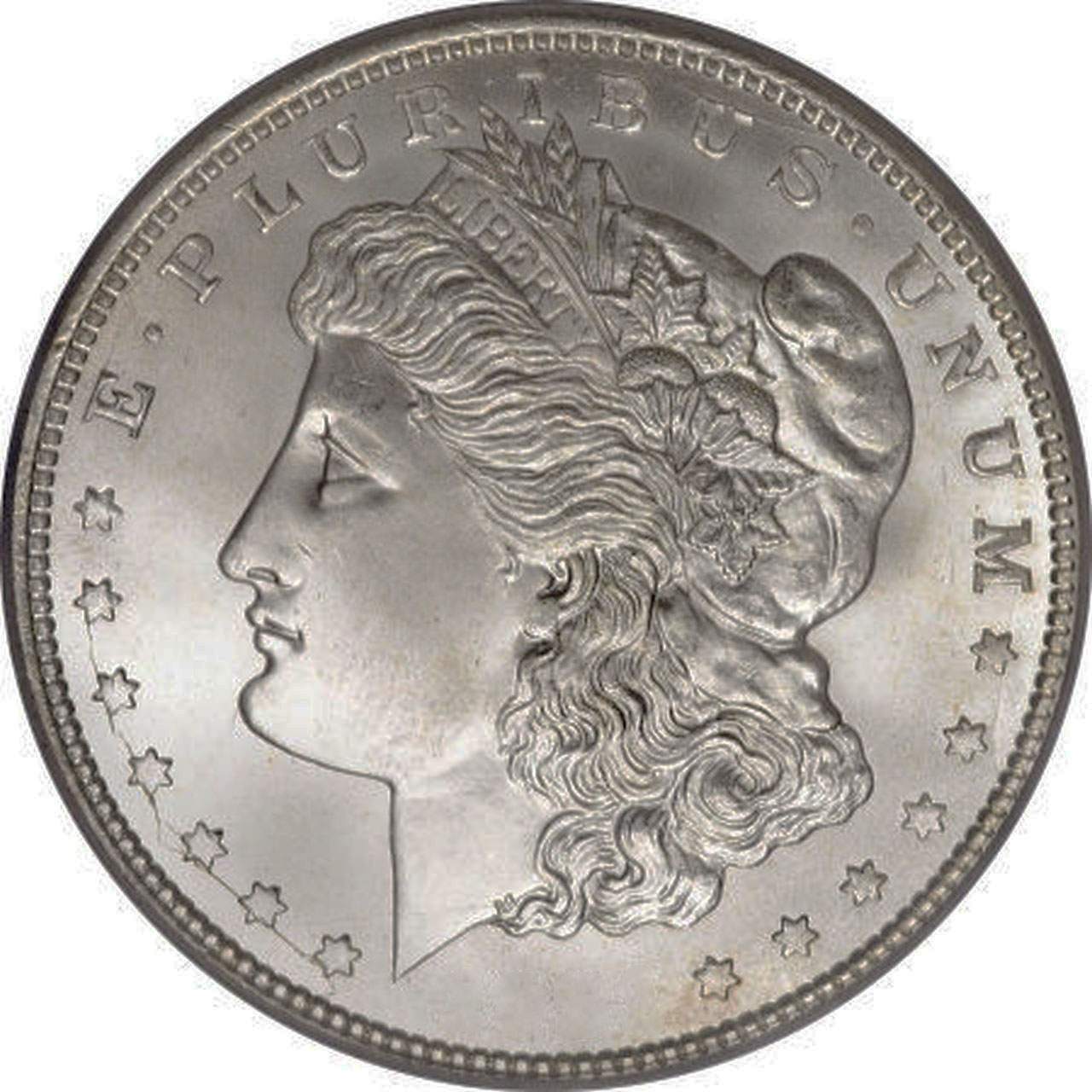
The Morgan Silver Dollar was struck from 1878 to 1904 and again in 1921, across five US Mint facilities. That's 28 years and roughly a hundred date-mintmark combinations — most of which are common silver coins worth a small premium over melt. About a dozen, though, are the dates serious collectors actually chase.
This guide covers every Morgan Dollar key date, with current LuckyCoin catalog values at G-4, F-12, XF-40, MS-63, and MS-65. Each date links to its full grade-by-grade chart on the coin page.
The Carson City Morgans
The Carson City Mint (1870–1893) struck Morgan dollars only when Comstock Lode silver was being deposited locally — a short, irregular run that produced relatively low mintages compared to Philadelphia and New Orleans. Every CC Morgan carries a premium for the mintmark alone, and several are genuine key dates.
| Date | Mintage | G-4 | XF-40 | MS-63 | MS-65 |
|---|---|---|---|---|---|
| 1878-CC | 2,212,000 | $170 | $300 | $800 | $2,300 |
| 1879-CC | 756,000 | $260 | $2,400 | $10,000 | $26,000 |
| 1881-CC | 296,000 | $300 | $400 | $800 | $1,300 |
| 1885-CC | 228,000 | $600 | $700 | $1,000 | $1,500 |
| 1889-CC | 350,000 | $700 | $5,000 | $40,000 | $320,000 |
1889-CCis the king of the Carson City Morgans — a late-series low-mintage strike where most coins were lightly handled and entered circulation, leaving very few mint-state survivors. In MS-65 it's a six-figure coin.
1879-CC is the secondary CC key. The mintage is higher than 1881-CC or 1885-CC, but most 1879-CC dollars went straight into circulation rather than being held in Treasury bags. The result is a steep price ramp: relatively cheap in G-4 ($260), expensive at XF-40 ($2,400), and well into five figures in mint state.
The Philadelphia and S-mint key dates
| Date | Mintage | G-4 | XF-40 | MS-63 | MS-65 |
|---|---|---|---|---|---|
| 1893-S | 100,000 | $3,200 | $13,000 | $320,000 | $800,000 |
| 1894 | 110,000 | $700 | $1,300 | $6,000 | $37,000 |
| 1895-S | 400,000 | $250 | $1,900 | $9,000 | $19,000 |
| 1903-S | 1,241,000 | $70 | $600 | $11,000 | $16,000 |
1893-Sis the king of the regular-issue Morgan series. Only 100,000 struck, and unlike CC dollars, no large Treasury hoards of 1893-S coins were ever found — meaning most of the 100,000 either circulated heavily or were lost. In MS-63 it's a $320,000 coin; in MS-65 it's closer to $800,000. Even a worn G-4 starts at $3,200.
1894 is the lowest-mintage Philadelphia Morgan (110,000). The Philadelphia Mint was distracted with gold coinage that year and produced minimal silver. Coins that escaped circulation tend to be problem-free and command strong premiums all the way up the grade scale.
The 1895 Philadelphia: King of the Morgans
The 1895 Philadelphia Morgan is the most famous date in the series — and not because it's a regular issue. The Mint records show 12,000 business strikes were produced, but no example has ever been confirmed in collector hands. The only 1895 Philadelphia Morgans known today are the 880 proofs struck for collectors and presentation sets. That makes the 1895 a proof-only year for practical purposes, and one of the most expensive coins in the Morgan series.
| Date | Mintage (proof) | PR-60 | PR-63 | PR-65 |
|---|---|---|---|---|
| 1895 (Proof) | 880 | $21,000 | $50,000 | $100,000 |
The 1895 Philadelphia is the date most often missing from advanced Morgan sets. Collectors who complete the rest of the series usually give up on the 1895 because the price floor is well into five figures even for a low-grade proof. Anyone offering a "business strike 1895 Philadelphia" should be treated with extreme skepticism — none have ever been confirmed.
What about 1921 Morgans?
After a 17-year gap (1904–1920), the Morgan was briefly revived in 1921 to fulfill the silver-bullion-coverage requirements of the Pittman Act. Three mints struck 1921 Morgans (Philadelphia, Denver, San Francisco) for a combined mintage of over 86 million — by far the highest of any year in the series. 1921 Morgans are not scarceand trade close to silver melt value in worn condition. They're common, attractive, and a fine starter — but not key dates.
The semi-key dates worth knowing
Beyond the headline rarities, several Morgans are scarcer than common dates without being four-figure coins. Worth knowing if you're building a complete set:
- 1879-S Reverse of 1878 — same coin as a regular 1879-S but with the older reverse die. Recognizable by the parallel arrow feathers (later 1879-S has slanted feathers).
- 1880-CC, 1882-CC, 1883-CC, 1884-CC — common in mint-state from Treasury hoards but scarce in circulated grades. Worth identifying if you spot the CC mintmark on a worn Morgan.
- 1892-S — common in low grade, very scarce in MS-60+.
- 1899 — Philadelphia, 330,846 mintage, often overlooked semi-key.
- 1901 — relatively common circulated, very rare in mint state because of weak strike issues.
How to identify a Morgan dollar mintmark
On the reverse of every Morgan, just below the eagle's tail feathers and above the "DO" in DOLLAR, the mintmark identifies which mint struck the coin: blank for Philadelphia, S for San Francisco, D for Denver (1921 only), O for New Orleans, and CC for Carson City. For the full guide to mintmark locations on every US denomination, see How to Read Mint Marks on US Coins.
- What is the rarest Morgan Silver Dollar?
- For business-strike Morgans, the 1893-S (mintage 100,000) is the recognized king and trades from $3,200 in G-4 up to $800,000 in MS-65. The 1895 Philadelphia exists only as 880 proofs and is functionally a proof-only year — even a low-grade proof starts around $21,000.
- Are all CC Morgan dollars valuable?
- All Carson City Morgans carry a mintmark premium because of the Carson City Mint's short and irregular operating history. Common CC dates trade for $100–$300 in low grades; key CC dates like 1879-CC and 1889-CC reach into the thousands and tens of thousands at higher grades.
- How can I tell a real Morgan from a fake?
- Genuine Morgans weigh 26.73 grams (silver coins should be slightly heavy compared to modern clad). Counterfeits are usually either wrong weight or wrong sound — drop a real Morgan on a wood surface and it has a high silver ring; modern fakes ring dull. For high-value dates, always insist on PCGS or NGC slabs.
- Is the 1921 Morgan a key date?
- No. 1921 Morgans were struck in massive quantities (over 86 million across three mints) to satisfy the Pittman Act. They trade close to silver melt value in worn condition and are the most common Morgan year by far.
- What is the cheapest way to start a Morgan collection?
- Common-date Morgans in worn condition (1881-S, 1882, 1883-O, 1884-O, 1885-O, 1900-O, 1921 of any mint) trade close to the silver melt value of around 0.77 oz per coin. A representative common Morgan is a great way to own the design and the silver without committing to a key date hunt.