How to Grade a Coin Without Sending It In: The Sheldon Scale Explained
Catalog values and authentication details — how to grade coins.
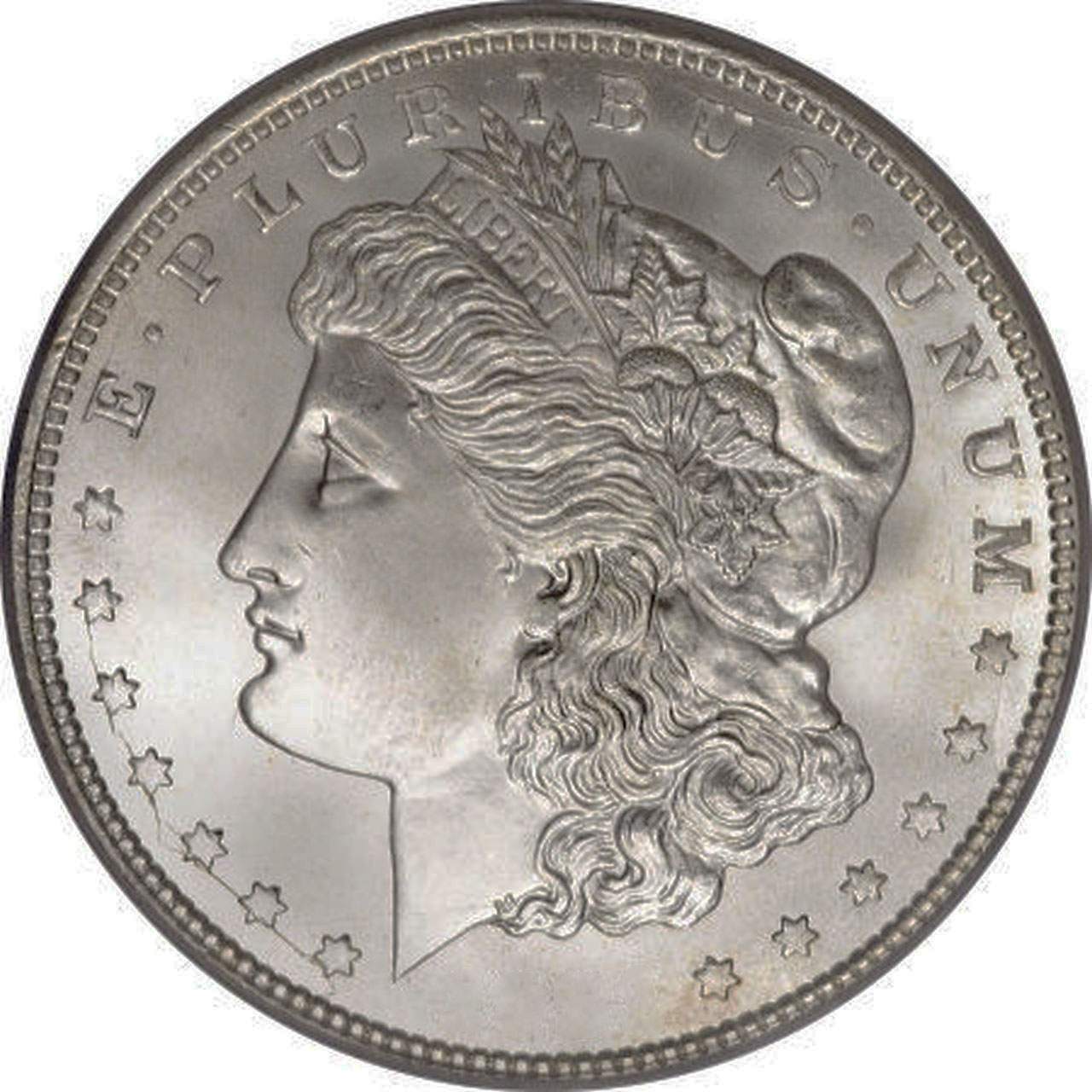
Grade is half the value. A Morgan Silver Dollar in Good (G-4) condition and the same date in Mint State (MS-63) can differ in price by ten times or more — same coin, same year, same mint. That single number on a slab, or the grade you assign before submitting, is the most important variable in any collector transaction. Learning to read it accurately is the first practical skill in numismatics.
This guide walks through the entire Sheldon scale — the 1-to-70 system used by every dealer, auction house, and grading service in the United States — and explains what to look at on four of the most collected denominations. You won't grade like a professional after one read, but you will stop buying coins at the wrong grade.
The Sheldon scale: 1 to 70
Dr. William Sheldon introduced a numeric grading scale in 1949 in his reference Early American Cents, 1793–1814, originally as a way to express large cent values across condition tiers. Over the following decades the hobby standardized around his framework, and today PCGS, NGC, and every major dealer use the same 1–70 integers. The scale divides into three broad tiers: circulated (1–58), Almost Uncirculated (50–58, a transitional zone), and Mint State (60–70).
The numbers are not evenly spaced in terms of visual difference. The jump from G-4 to VG-8 is a bigger physical change than the jump from MS-64 to MS-65, yet both are four or eight points apart on the scale. Think of the lower half of the scale as measuring how much detail survives after wear, and the upper half as measuring how pristine a surface is despite having no wear at all.
Circulated grades: Poor through Extremely Fine
Circulated coins have been used as money. Metal has been displaced from the high points of the design by friction with pockets, cash registers, and other coins. The grades below describe how much original detail remains.
| Grade | Abbreviation | What you see |
|---|---|---|
| Poor | P-1 | Barely identifiable as a coin; date may be missing or nearly gone |
| Fair | F-2 | Date visible but heavily worn into the field; most detail lost |
| About Good | AG-3 | Date readable; outline of design present; rim mostly gone |
| Good | G-4 | Full outline of major design elements; nearly all fine detail flat |
| Very Good | VG-8 | Major design features clear; some interior detail begins to show |
| Fine | F-12 | Moderate even wear; all major details visible but flat on high points |
| Very Fine | VF-20 / VF-30 | Light to moderate wear on high points only; most detail sharp |
| Extremely Fine | XF-40 / XF-45 | Light wear on highest points only; all detail sharp and clear |
The practical checkpoint between VF and XF is whether you can see separation in the finest design elements — individual hair strands, feather edges, leaf veins — without a loupe. XF coins show those details clearly to the naked eye. VF coins show the element is there, but the fine lines have merged.
Almost Uncirculated: AU-50, AU-53, AU-55, AU-58
Almost Uncirculated coins spent very little time in circulation, or were mishandled soon after leaving the mint. The key diagnostic is luster: original mint luster is a cartwheel-like sheen created by metal flow during striking. Wear breaks luster immediately, leaving a flat, dull patch on the high points. AU coins have luster interrupted only on the very highest points.
AU-50 shows wear on all high points but at least half of the original luster survives. AU-58 — sometimes called "slider" in the trade — has only the faintest friction on one or two high points and nearly full luster. A slider is the highest circulated grade and often sells for 60–80% of an MS-60 price on popular issues.
The hardest call in home grading is distinguishing AU-58 from MS-60 or MS-61. Both look nearly perfect to the naked eye. Tilt the coin slowly under a single light source: an AU-58 will show a flat patch on the cheek or highest hair curl that breaks the cartwheel pattern. An MS coin keeps luster rotating continuously across the entire field and portrait.
Mint State: MS-60 through MS-70
Mint State coins have no wear at all — the Sheldon scale definition is absolute. But "no wear" does not mean "perfect." Within MS-60 to MS-70, graders evaluate contact marks (nicks from other coins in mint bags), strike quality (how fully the dies pressed the design into the planchet), luster quality, and eye appeal.
| Grade | What separates it from the grade below |
|---|---|
| MS-60 | No wear, but heavy bag marks and poor eye appeal; may be dull or heavily abraded |
| MS-62 | Fewer marks; luster present but may be impaired; still noticeably flawed |
| MS-63 | Moderate marks in secondary areas; no major marks on portrait or central design |
| MS-64 | Minor marks only; good luster; above-average eye appeal |
| MS-65 | Strong luster; only a few small marks; gem appearance |
| MS-66 | Above-average strike; minimal marks; high-end gem |
| MS-67 | Exceptional; marks nearly absent; strike must be sharp |
| MS-68 – MS-70 | Effectively perfect; extremely rare; MS-70 is theoretically flawless |
For most common-date coins, the price jump between MS-64 and MS-65 is where value accelerates sharply. For key dates, it often starts at MS-63 vs. MS-64. Always check the specific issue's population report before assuming a grade difference is proportionally valuable.
What to look at on four popular denominations
General grade descriptions only take you so far. Each coin design has specific high points that wear first and specific fine details that distinguish the grade boundaries. Here is where to look on four of the most collected series.
Lincoln cents
On the obverse, start with Lincoln's hair above and behind the ear. This is the first area to go flat in circulation. Next check the cheekbone and jaw line — at VF-20 you should see a distinct cheek; below F-12 it begins to merge with the field. The bowtie at Lincoln's collar is a useful checkpoint in lower grades: at VG-8 it should still be visible as a distinct element, even if flat.
On the reverse of Lincoln Wheat cents, check the individual lines within each wheat stalk. At XF-40, all lines are sharp. At VF-20, some inner lines have merged. At F-12, the stalks read as solid shapes with only the outer edges defined. See our Wheat Penny Value Chart for how grade affects value across the full series.
Mercury dimes
Mercury dimes are graded heavily on the obverse braid details in Liberty's hair and the diagonal bands on the fasces (the reverse bundle of rods). The bands on the fasces are so important that PCGS and NGC add an "FB" (Full Bands) designation for coins where both horizontal bands are fully separated — a designation that can double or triple value in MS grades. At home, check band separation under a 5x loupe before assuming your Mercury dime qualifies.
Washington quarters
On Washington quarters, the primary wear point is the hair above Washington's ear and along the top of his head. At XF-40, all hair strands are sharp and separated. At VF-20, the hair above the ear begins to show merging lines. At F-12, the hair reads as a solid mass with only the edge defined. The eagle on the reverse wears at the breast feathers; at Fine grades the breast reads nearly flat.
Morgan dollars
Morgan Silver Dollarsare the most actively graded coin in the hobby. The cheek is the single most important surface: it is large, smooth, and shows wear as a subtle flatness that is easy to mistake for a bag mark. In hand, tilt the Morgan so light rakes across the cheek — a worn coin shows a color shift (dull vs. lustrous) that a bag-marked but unworn coin does not. Also check the hair above the ear and the cotton blossoms at Liberty's temple. On the reverse, the eagle's breast feathers go flat first; at AU grades they should show complete feather separation.
Color designations for copper coins
Copper coins — Lincoln cents, Indian Head cents, early large cents — carry an additional color suffix that grading services append to Mint State grades:
- RD (Red): At least 95% of the original mint red color survives. The most desirable designation; adds significant premium.
- RB (Red-Brown): Between 5% and 95% original red; the coin shows mixed copper toning. Most MS Lincoln cents fall here.
- BN (Brown): Less than 5% original red; coin has fully toned to brown. Brown coins at MS still have no wear, but the color premium is gone.
Color is also relevant to authentication. A copper coin that has been cleaned and re-toned often shows an unnatural or uniform color — either too pink (recently stripped) or a flat chocolate brown without the texture of natural toning. Never clean a copper coin; see our guide on why cleaning destroys coin value for the full explanation.
Lighting and tools for home grading
You do not need expensive equipment to grade coins at home, but the right setup makes an enormous difference.
- Single light source: One incandescent or LED bulb held at a low angle — not overhead — lets you see luster cartwheel and surface texture. Diffuse or overhead light flattens everything and hides both wear and marks.
- 5x or 10x loupe: Sufficient for most grading checks. A 10x loupe lets you see die polish lines, hairlines from cleaning, and the fine details (Mercury dime bands, Lincoln wheat lines) that separate close grades.
- White matte background: Helps you read coin color accurately. Glossy surfaces and dark backgrounds skew your color perception on copper and silver.
- Cotton gloves or coin tongs: Never touch a coin surface with bare fingers. Finger oils etch into copper and silver over months and can permanently damage an otherwise high-grade surface.
Hold coins by the edge at all times. Rest them on a soft pad when setting down. These habits cost nothing and protect value.
When to send for professional grading
Home grading is for research, not for transactions above a certain threshold. The break-even calculation is straightforward: PCGS and NGC both charge submission fees, and those fees need to be covered by the premium a certified slab commands over a raw coin. For most common series, that break-even point is roughly in the range where grading fees represent less than 10% of the coin's value — but the exact threshold varies by submission tier and current market. The coin grading scale reference lists every grade with its PCGS/NGC tier name and what it means in practice — useful for setting expectations before you submit.
The practical rule used by most dealers: if you would pay more than $100 for the coin in the grade you think it is, get it slabbed before buying or selling. Authentication matters as much as grade for any coin with a history of counterfeiting or alteration. See our guide on how to read mint marks — altered mintmarks are one of the most common forms of counterfeiting, and a genuine slab eliminates that risk entirely.
For raw coins you already own, the math also includes turnaround time (weeks to months depending on service tier) and the risk that the coin grades lower than expected. A coin you think is MS-64 that comes back MS-62 will be worth less than you paid for grading, but you will know exactly what you have.
- What is the Sheldon scale?
- The Sheldon scale is the 1-to-70 numeric grading system used universally in US numismatics. Grades 1–58 are circulated (with 50–58 designated Almost Uncirculated), and grades 60–70 are Mint State, meaning no wear at all. The scale was introduced by William Sheldon in 1949 and adopted by PCGS (founded 1986) and NGC (founded 1987) when modern third-party grading and encapsulation began in the mid-to-late 1980s.
- How do I tell the difference between AU-58 and MS-60?
- Tilt the coin slowly under a single light source and watch the luster cartwheel. An AU-58 will show a dull, flat patch on the highest point — typically a cheek or hair curl — where luster breaks. An MS-60 keeps the cartwheel luster rotating across the entire surface, including the high points, but may have heavy bag marks or a dull, unattractive surface from mint bag contact. The luster test is the definitive check; looking straight down at the coin makes the two grades nearly impossible to distinguish.
- Does cleaning a coin improve its grade?
- No — cleaning always reduces value and can never improve a professional grade. PCGS and NGC assign "details" grades (e.g., "AU Details — Cleaned") to cleaned coins, which trade at steep discounts to problem-free examples at the same numerical grade. Microscopic hairlines left by even gentle wiping are permanent and visible under magnification. Read our full guide on why you should never clean a coin before touching any coin you care about.
- What does the RD, RB, or BN suffix mean on a Lincoln cent grade?
- These are color designations applied to copper coins by grading services. RD (Red) means at least 95% of original mint red color survives — the most desirable. RB (Red-Brown) means mixed original and toned surfaces, between 5% and 95% red. BN (Brown) means the coin has fully toned, with less than 5% original red. Color significantly affects value: an MS-65 RD Lincoln cent is worth considerably more than an MS-65 BN of the same date.
- What tools do I need to grade coins at home?
- The essentials are a 5x or 10x loupe, a single incandescent or LED lamp positioned at a low angle (not overhead), a white matte surface to rest coins on, and cotton gloves or coin tongs to avoid touching surfaces. A good smartphone camera with macro mode can supplement the loupe for documentation. Expensive microscopes are not necessary for circulated grades; they become useful in the MS-65 and above range where tiny marks drive significant value differences.
- When is it worth sending a coin to PCGS or NGC?
- The general rule among dealers is: if the coin would be worth more than $100 in the grade you believe it is, professional certification is worth the cost. Slabbed coins sell for retail without authentication risk to the buyer; raw coins above that threshold require the buyer to trust the seller's grade assessment. For coins with counterfeiting history — any coin where mintmarks or design elements are commonly altered — slabbing is worthwhile at lower thresholds. Always check current PCGS and NGC fee schedules before submitting.
- Why do coins in the same grade vary so much in price?
- Grade is one variable, but mintage, mintmark, series popularity, and population rarity within that grade all affect price independently. A common-date Washington quarter in MS-65 and a key-date in MS-65 carry the same grade label but entirely different prices because far fewer key-dates exist at that level. Always check the population report for a specific date and mintmark, not just the grade, before assessing value.