Clipped Planchet Errors: What They Are and What They're Worth
Catalog values, history, and authentication — clipped planchet error.
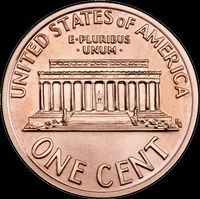
A coin with a neat curved bite taken out of its edge looks, at first glance, like something went wrong after it left the Mint — a damaged coin worth face value at best. In most cases that instinct is right. But a genuine clipped planchet error is something different: a mistake that happened before the coin was ever struck, when the metal blank was punched from the supply strip incorrectly. These are real Mint errors, they are collectible, and the larger the clip, the more they are worth.
This guide explains how clipped planchet errors happen, how to tell the three sub-types apart, how to distinguish a real clip from a coin that was simply trimmed with a tool after it left the Mint, and what the collector market currently pays at different clip sizes.
How a clipped planchet error happens
US coins are struck on round blanks called planchets. Those planchets are punched out of long, flat metal strips — think of a cookie cutter running down a ribbon of dough. The strip advances a set distance between each punch so that the holes don't overlap. When the mechanical feed malfunctions and the strip fails to advance far enough, the next punch overlaps a hole that was already cut. The resulting blank is missing a section where it overlapped empty space, and that incomplete blank — clipped planchet — goes on to be struck just like any other.
The Mint has automated detection systems that reject many defective blanks before striking, but some slip through. When they do, the coin-shaped result carries both the full design (within whatever surface area remained) and the unmistakable missing section that defines the error type.
The three types of clipped planchet errors
Curved clip (most common)
A curved clip is caused by the overlap scenario described above. The missing section has a smooth, concave arc that mirrors the diameter of a planchet punch — because it literally is the shape of a previously punched hole. Curved clips range from tiny nicks representing a few percent of the planchet to dramatic bites that remove 30% or more of the coin's area. This is by far the most frequently encountered type. Lincoln Memorial cents and earlier Lincoln Wheat cents are the denomination most commonly found with curved clips, simply because so many billions were produced and small-percentage errors were less likely to be caught in quality control on a high-volume, low-value run.
Straight clip
A straight clip occurs when a planchet is punched too close to the end — or the torn edge — of the metal strip. Instead of a curved arc, the missing section has a flat, straight cut running across part of the coin's edge. Straight clips are less common than curved clips and tend to command a modest premium over a curved clip of similar size because they are less frequently found.
Ragged clip
A ragged clip results from a torn or jagged strip edge passing under the punch. The missing section has an irregular, uneven edge rather than the clean arc of a curved clip or the clean line of a straight clip. Ragged clips are the rarest of the three types and can sometimes be confused with post-mint damage — authentication is especially important here (see below).
The Blakesley effect: the diagnostic that proves authenticity
The single most important authentication tool for a curved clipped planchet is the Blakesley effect, named for the American numismatist who first described it in the late 1960s. When a planchet is incompletely punched, the upset mill — the machine that raises the rim around the blank before striking — cannot properly upset the edge directly opposite the clip. Metal has to flow somewhere during upsetting, and without the full circumference present, the rim on the side diametrically opposite the clip ends up weak or missing entirely.
This means a genuine curved clipped planchet will show:
- A smooth, curved missing section on one side of the coin.
- A noticeably weak, flat, or missing rim segment on the opposite side of the coin.
A coin that has been trimmed, filed, or cut after striking will have no such rim weakness opposite the cut — the rim was already fully formed before the damage was done. This one check eliminates the majority of altered coins.
Real clip vs. altered coin: the full checklist
Beyond the Blakesley effect, the following characteristics separate a genuine clipped planchet from a coin that was damaged or altered after minting. When in doubt, consult our guide on how to spot counterfeit and altered coins.
| Feature | Genuine clipped planchet | Post-mint alteration |
|---|---|---|
| Cut edge surface | Smooth, no tool marks, metal flow continuous | May show saw marks, file marks, or grinding scratches |
| Rim opposite the clip | Weak, flat, or absent (Blakesley effect) | Normal full rim all the way around |
| Metal flow at clip edge | No metal pushed toward cut — clip predates strike | May show displaced metal or burrs if cut after striking |
| Design at clip | Design simply ends where metal is absent | Design details may be distorted near cut |
| Shape of missing section | Matches planchet-punch diameter (curved) or strip edge (straight) | Arbitrary shape; may not follow any standard curve |
What clipped planchet errors are worth
Value is driven primarily by clip size (what percentage of the planchet is missing), denomination (higher-face coins carry higher base values), clip type (ragged and straight clips are scarcer than curved), and coin grade. The ranges below reflect the general collector market for common denominations such as Lincoln cents and Jefferson nickels; the same clip on a dollar coin or a gold piece would command substantially more.
| Clip size | Approximate value range | Notes |
|---|---|---|
| Small (5–10% missing) | $5–$15 | Easy to overlook; confirm Blakesley effect carefully |
| Medium (15–25% missing) | $15–$50 | Most common range traded at shows and online |
| Large (30%+ missing) | $50–$200+ | Dramatic appearance; easier to authenticate visually |
These ranges reflect general market observations for common US cents and nickels. No specific catalog values were available for this article — always check current sold listings before buying or selling. Multiple clips on a single coin (a "double clip") can push values above these ranges.
Straight and ragged clips typically trade at a premium over a curved clip of equivalent size and grade because they are encountered less frequently. Professional grading by PCGS or NGC adds a meaningful premium for clips above roughly $50 in value, since authentication matters more once real money is involved.
Where clipped planchet errors show up
Clipped planchets have been found on virtually every US denomination. Lincoln cents — both the Memorial and Wheat Reverse series — account for the largest share of reported clips simply because of the enormous production volumes involved. Jefferson nickels are the second most commonly encountered denomination, followed by Roosevelt dimes and Washington quarters.
Larger denomination clips (half dollars, dollar coins, and commemoratives) are proportionally rarer because production runs are smaller and quality control tends to be tighter on higher-value planchets. When they do appear, they command strong premiums over the equivalent cent or nickel clip.
Roll searching and bank-bag searches occasionally turn up small clipped cents that were missed in production. The most dramatic examples — large curved clips, double clips, or clips on proof coins — almost always surface through dealer inventories, auction houses, or inherited collections rather than pocket change.
Clipped planchets are one of several major error categories worth learning alongside off-center strike errors, which occur at the striking stage rather than the blank-preparation stage and follow a different set of authentication rules.
Collecting clipped planchets: a practical starting point
Clipped planchet errors are one of the most accessible entry points in error collecting. Small curved clips on Lincoln cents are inexpensive enough that a beginner can build a type set — one of each clip type, one of each denomination — without spending more than a few hundred dollars. From there, the natural progression is chasing larger clips, rarer denominations, or the more spectacular double-clip and triple-clip coins that show up at major auctions.
The authentication skills required — learning the Blakesley effect, reading metal flow, recognizing tool marks — are directly transferable to other error types and build the kind of eye that protects you throughout a numismatic career.
- What is a clipped planchet error?
- A clipped planchet error is a coin struck on an incomplete blank. The blank was incompletely punched from the metal supply strip before striking — either because the strip failed to advance far enough (causing a curved clip) or because the punch caught the strip's end or torn edge (causing a straight or ragged clip). The missing section was absent before the coin was ever struck.
- How do I know if my clipped coin is a real Mint error or just damage?
- Check for the Blakesley effect: a genuine clipped planchet will have a noticeably weak or missing rim segment directly opposite the clip. Also examine the cut edge under magnification — a real clip shows no tool marks and no metal pushed toward the cut. Post-mint damage typically shows file or saw marks and has a normal full rim on all sides. When in doubt, consult our guide on spotting altered coins.
- What is the Blakesley effect?
- The Blakesley effect is the rim weakness that appears on a genuine clipped planchet directly opposite the clip. During the upsetting process — where a raised rim is formed around the blank before striking — the incomplete planchet cannot support normal metal flow around its full circumference. The result is a weak or flat rim segment on the side opposite the missing section. This diagnostic is absent on coins that were clipped after minting.
- How much is a clipped penny worth?
- It depends on clip size. A small curved clip (5–10% of the planchet missing) on a Lincoln cent typically brings $5–$15. A medium clip (15–25% missing) ranges from $15–$50. A large, dramatic clip (30% or more missing) can reach $50–$200 or higher. Straight and ragged clips command a premium over curved clips of the same size.
- Are double-clipped coins worth more?
- Yes — a coin with two or more distinct clips is rarer than a single-clip example and is generally valued above the ranges for single clips of equivalent size. Double clips also make authentication easier in some respects because the probability of both clips being post-mint damage drops sharply, especially when both clips show the Blakesley effect.
- Which denomination has the most clipped planchet errors?
- Lincoln cents account for the largest share of known clipped planchet errors, driven by the enormous production volumes of both the Wheat Reverse and Memorial reverse series. Jefferson nickels are the second most common denomination for clipped planchets.
- Should I get a clipped planchet coin professionally graded?
- For clips valued above roughly $50 — large clips, rare denominations, or straight and ragged clips — professional grading by PCGS or NGC is worth the submission cost. Both services authenticate error coins and will note the clip type and estimated clip percentage on the label. Below that threshold, the submission fee may exceed the added value.