Buffalo Nickel Key Dates and Errors Worth Looking For
The Buffalo Nickel ran from 1913 to 1938 and produced some of the most famous error coins in US numismatics. The 1937-D 3-Legged, the 1918/7-D overdate, and the 1916 doubled die — what each is actually worth, with catalog values.
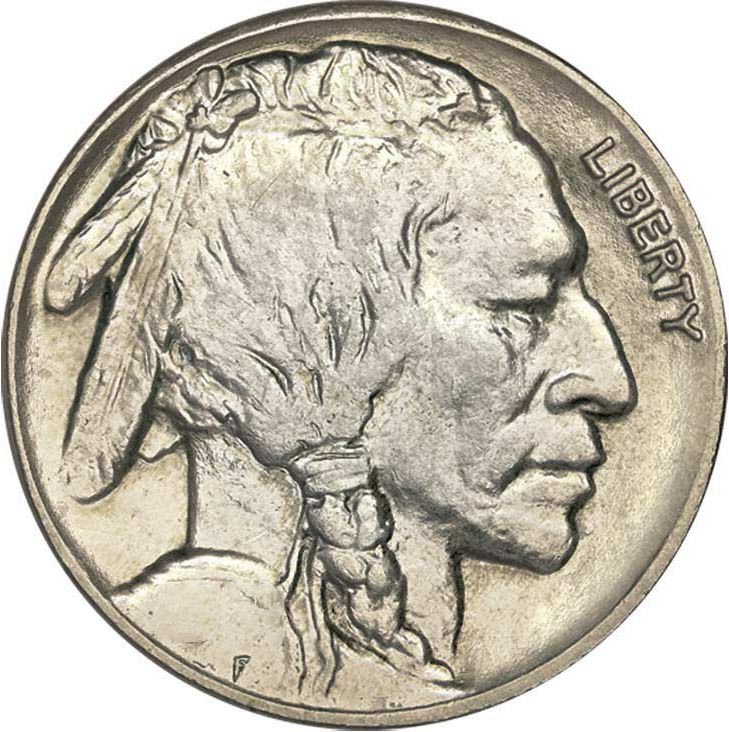
The Buffalo Nickel ran from 1913 to 1938 and has produced more famous error coins than almost any other US series. Most date-mintmark combinations are common — worth a dollar or two even in worn condition — but a handful of dates and a famous trio of die errors regularly trade in the hundreds to thousands of dollars.
This guide covers every Buffalo Nickel worth looking for, with current LuckyCoin catalog values. Each entry links to the full grade-by-grade chart on the coin page.
Type 1 vs Type 2: the first-year quirk
When the Buffalo Nickel debuted in 1913, the original reverse showed the buffalo standing on a raised mound of earth, with the words FIVE CENTS placed on top of the mound. The mound wore quickly under circulation, abrading the denomination and making it illegible. So partway through 1913 the Mint redesigned the reverse — the mound was replaced with a flat exergue and FIVE CENTS was incused below it.
That gives 1913 two distinct reverses, both produced at all three mints (Philadelphia, Denver, San Francisco). They're catalogued separately and have different values.
| Date / Type | Mintage | G-4 | XF-40 | MS-63 | MS-65 |
|---|---|---|---|---|---|
| 1913 Type 1 | 30,992,000 | $13 | $24 | $110 | $190 |
| 1913-D Type 2 | 5,337,000 | $17 | $45 | $130 | $320 |
First-year coins are inexpensive in low grades but rise quickly with condition — strong-strike Type 1 examples in MS-65+ are sought after because the high-relief mound design rarely survives a clean strike.
The three famous Buffalo Nickel errors
Three die errors define the "Buffalo Nickel key dates" category for most collectors. Each one is worth real money even in worn condition.
1937-D 3-Legged Buffalo
| Grade | Catalog Value |
|---|---|
| G-4 | $500 |
| F-12 | $700 |
| XF-40 | $1,000 |
| MS-63 | $6,000 |
| MS-65 | $26,000 |
The most famous Buffalo Nickel error, the 1937-D 3-Legged Buffalo was created when a Mint employee over-polished the working die to remove clash marks and erased the buffalo's right foreleg in the process. The result: a buffalo that appears to stand on three legs. The error continued in production for some time before being caught.
Authentication tip: the difference between a real 3-Legged and a regular 1937-D with damage is whether the leg is missing from the die or removed from a struck coin. Real 3-Legged shows a complete absence of the leg with a slightly raised "stripe" where the leg contour shows through to the field. Damage to a regular coin produces irregular gouges, not a smooth removal.
1918/7-D Overdate
| Grade | Catalog Value |
|---|---|
| G-4 | $23 |
| F-12 | $70 |
| XF-40 | $240 |
| MS-63 | $1,000 |
| MS-65 | $3,900 |
The 1918/7-D Overdate was created when an obverse die intended for 1917 was repunched with a 1918 date over the 1917 — leaving the underlying 7 visible inside and behind the 8. Look for the curve of the 7 inside the loop of the 8 and a thin line trailing from the bottom of the 8 to the lower right.
Most 1918/7-D coins were spent rather than collected, so well-worn examples are common but rarely cheap. High-grade examples are genuinely rare.
1916 Doubled Die Obverse
The 1916 Doubled Die Obverse shows strong doubling on the date. Look for a noticeably thickened appearance on each digit of "1916" with secondary doubling visible under magnification. Worn examples can show only weak doubling and are easy to miss; mint-state examples show it dramatically.
Other key dates worth checking
| Date | Mintage | G-4 | XF-40 | MS-63 | MS-65 |
|---|---|---|---|---|---|
| 1926-S | 970,000 | $23 | $800 | $10,000 | $110,000 |
The 1926-Sis the lowest-mintage regular-issue Buffalo Nickel. In worn condition it's only modestly more expensive than common dates, but mint-state survivors are extremely rare — note the steep ramp from $800 at XF-40 to $10,000 at MS-63 to $110,000 at MS-65. That MS-65 number reflects the reality that almost no 1926-S coins were saved at the time of issue; they all circulated.
Other dates worth a closer look in inherited rolls:
- 1913-S Type 2 — first-year San Francisco with the second-style reverse
- 1914-D, 1914-S — semi-keys, both branch mints
- 1915-S — low San Francisco mintage
- 1924-S — late-Type-1 era key
- 1931-S — Depression-era low mintage
How to read Buffalo Nickel mintmarks
On the reverse of the Buffalo Nickel, the mintmark sits below FIVE CENTS, just under the buffalo's right foreleg. D for Denver, S for San Francisco, no mark for Philadelphia. The mintmark is small and often weakly struck — on worn examples it can be difficult to read, which is why a magnifying glass is essential when sorting through a Buffalo jar. The full denomination guide is in our How to Read Mint Marks on US Coins article.
What about dateless Buffalos?
The Buffalo Nickel's date sits on a raised pedestal that wore quickly in circulation. Many heavily-worn examples have lost the date entirely. Dateless Buffalo Nickelstrade for bullion-or-novelty value (typically $0.30–$1.00 each) — the design is recognizable, but without a readable date you can't identify which year, which mint, or whether it's a key date.
Acid-restoration kits exist that can sometimes reveal a faint date on heavily worn coins. The result is a clearly-altered surface that professional graders will not encapsulate, but it's sometimes worth doing for sentimental or research purposes — never for resale.
- What is the most valuable Buffalo Nickel?
- The 1937-D 3-Legged Buffalo is the most famous and consistently valuable, ranging from $500 in Good to over $26,000 in MS-65. The 1926-S in MS-65 is even rarer in absolute terms, but most collectors don't encounter MS-65 examples — the 1937-D 3-Legged is the realistic top of most collections.
- How can I tell a real 1937-D 3-Legged from a damaged regular?
- On a real 3-Legged, the foreleg is missing because it was removed from the die — leaving a smooth field where the leg should be, with a faint "stripe" outline. On a damaged regular 1937-D, the leg is gouged or scratched off the struck coin and shows uneven, irregular damage. PCGS and NGC will authenticate either way; for any high-value example, get it slabbed.
- Are dateless Buffalo Nickels worth anything?
- Most dateless Buffalo Nickels trade for $0.30–$1.00 — recognizable design but no identifiable date or mintmark. They're fun historical pieces but not collector premium coins.
- How do I find the mintmark on a Buffalo Nickel?
- Reverse side, below FIVE CENTS, under the buffalo. D for Denver, S for San Francisco, no mark for Philadelphia. Use a 5–10× magnifier — the mintmark is small and often weakly struck.
- Should I clean a Buffalo Nickel?
- No. Cleaning destroys the natural toning and surface, and graders will reject obviously cleaned coins. Buffalo Nickels are copper-nickel and can take a darker brown or grey patina with age — that's natural and desirable. Leave them as found.