1932-D Washington Quarter: First-Year Key Date Value Guide
Catalog values and authentication details — 1932 d washington quarter value.
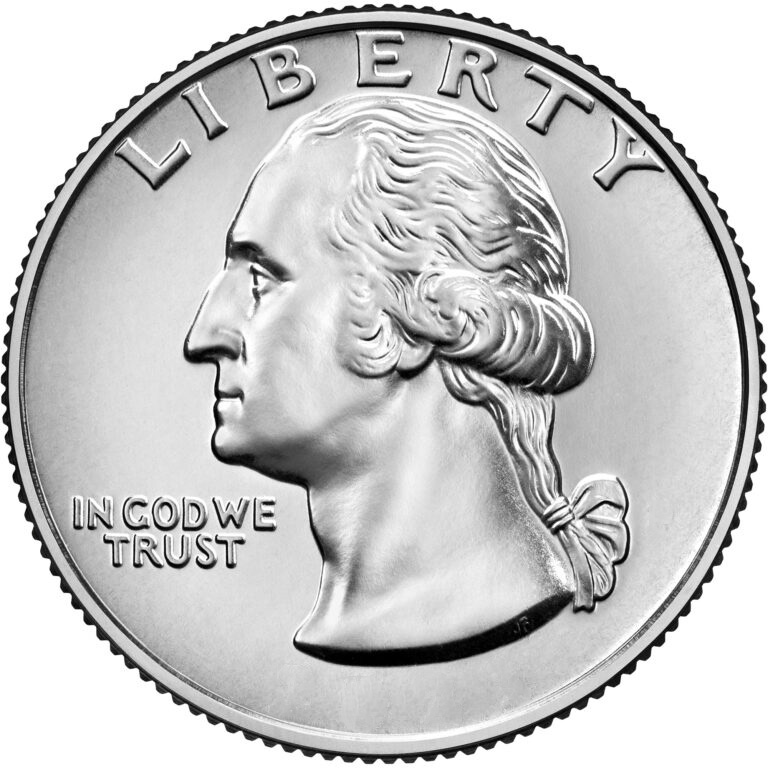
The 1932-D Washington Quarter is the rarest regular-issue coin in the entire Washington quarter series. Only 436,800 were struck at the Denver Mint — fewer than half a million — making it a key date from the very first year the series existed. Its San Francisco counterpart, the 1932-S, is nearly as scarce at 408,000 pieces. Together they bookend a debut year that produced two of the most sought-after quarters in American numismatics, while the Philadelphia issue of the same year — at 5,404,000 coins — trades for a fraction of the price.
This guide covers catalog values at every major grade for all three 1932 quarters, why the D and S mintages ended up so small, what to watch for when authenticating a raw coin, and what the coin's 90% silver composition means for collectors today.
What the 1932 Washington Quarter is
The Washington quarter was introduced in 1932 to mark the bicentennial of George Washington's birth. The design — based on a bust by sculptor Jean-Antoine Houdon — replaced the Standing Liberty Quarter that had been in production since 1916. The obverse shows Washington in left-facing profile; the reverse shows a heraldic eagle with wings spread. The coin is composed of 90% silver and 10% copper, a standard that held until 1965.
What made 1932 unusual is that the Mint originally intended the Washington quarter to be a one-year commemorative. Production was planned accordingly, which is why branch-mint quantities were kept small. The series was ultimately continued as a regular circulation issue beginning in 1934, but the initial low mintages were never corrected — locking in the 1932-D and 1932-S as permanent key dates.
Catalog values by grade
The tables below are drawn from the LuckyCoin catalog. The full Sheldon-scale chart with current sold-listing data lives on the Washington Quarter price guide.
1932-D Washington Quarter (mintage: 436,800)
| Grade | Approximate Value | What this grade looks like |
|---|---|---|
| G-4 | $75 | Outline clear; major details heavily worn flat |
| VG-8 | $80 | Some hair detail visible; full rim present |
| F-12 | $100 | Most hair and eagle feathers visible; even wear |
| VF-20 | $130 | Details sharp; light wear on highest points only |
| XF-40 | $210 | All details sharp; trace wear on hair and eagle |
| AU-50 | $320 | Slight wear on high points; luster mostly intact |
| AU-58 | $800 | Faintest wear; nearly full mint luster |
| MS-60 | $1,100 | No wear; noticeable contact marks |
| MS-63 | $1,600 | No wear; minor marks; acceptable luster |
| MS-64 | $2,600 | Above-average strike; few distracting marks |
| MS-65 | $11,000 | Sharp strike; nearly mark-free; strong luster |
| MS-66 | $90,000 | Exceptional preservation; top collector grade |
1932-S Washington Quarter (mintage: 408,000)
| Grade | Approximate Value | What this grade looks like |
|---|---|---|
| G-4 | $70 | Outline clear; major details heavily worn flat |
| VG-8 | $80 | Some hair detail visible; full rim present |
| F-12 | $90 | Most hair and eagle feathers visible; even wear |
| VF-20 | $120 | Details sharp; light wear on highest points only |
| XF-40 | $160 | All details sharp; trace wear on hair and eagle |
| AU-50 | $210 | Slight wear on high points; luster mostly intact |
| AU-58 | $290 | Faintest wear; nearly full mint luster |
| MS-60 | $370 | No wear; noticeable contact marks |
| MS-63 | $700 | No wear; minor marks; acceptable luster |
| MS-64 | $1,000 | Above-average strike; few distracting marks |
| MS-65 | $2,900 | Sharp strike; nearly mark-free; strong luster |
| MS-66 | $50,000 | Exceptional preservation; top collector grade |
1932 Philadelphia Washington Quarter (mintage: 5,404,000)
| Grade | Approximate Value | What this grade looks like |
|---|---|---|
| G-4 | $12.50 | Outline clear; major details heavily worn flat |
| VG-8 | $12.50 | Some hair detail visible; full rim present |
| F-12 | $12.50 | Most hair and eagle feathers visible; even wear |
| VF-20 | $12.50 | Details sharp; light wear on highest points only |
| XF-40 | $12.50 | All details sharp; trace wear on hair and eagle |
| AU-50 | $16 | Slight wear on high points; luster mostly intact |
| AU-58 | $26 | Faintest wear; nearly full mint luster |
| MS-60 | $30 | No wear; noticeable contact marks |
| MS-63 | $80 | No wear; minor marks; acceptable luster |
| MS-64 | $120 | Above-average strike; few distracting marks |
| MS-65 | $290 | Sharp strike; nearly mark-free; strong luster |
| MS-66 | $800 | Exceptional preservation |
| MS-67 | $9,000 | Finest-known territory; virtually flawless |
Catalog snapshot. Coin markets move — for any transaction, check current dealer pricing and the live Washington Quarter price guide.
Mintage figures and why D and S are scarce
The 1932-D mintage of 436,800 and the 1932-S mintage of 408,000 are among the lowest for any regular-issue Washington quarter. By comparison, the Philadelphia Mint struck 5,404,000 of the same design in the same year — more than twelve times the Denver output and more than thirteen times the San Francisco output. That gap is visible in prices: a circulated 1932-D in Good grade catalogs at $75, while the same grade Philadelphia coin catalogs at $12.50.
The low branch-mint figures are generally attributed to the economic conditions of 1932 — the depths of the Great Depression — which dramatically reduced demand for new coinage. The Mint adjusted production accordingly, pulling back hard on branch-mint output while still supplying the higher-volume Philadelphia distribution network. Whatever the exact cause, both the 1932-D and 1932-S survived into collector hands in relatively small numbers, and decades of attrition in circulation reduced the available pool further.
The mintmark on both branch-mint coins sits on the reverse, just below the eagle's tail and above the "QUARTER DOLLAR" legend. If you're new to reading mintmarks, the how to read mint marks guide walks through placement for every series.
Authentication: the altered-D problem
Because a 1932-D in Good grade catalogs at $75 and a 1932 Philadelphia in the same grade catalogs at $12.50, there is a clear financial incentive to add a fake D mintmark to a genuine Philadelphia coin. This alteration — sometimes called a "tooled" or "added mintmark" — is the most common counterfeit scenario for this date. Here is what to check before paying a premium.
1. The D mintmark must sit in the correct position
On a genuine 1932-D, the D mintmark is struck into the die and appears at the same depth as the surrounding field. An added mintmark is typically applied with a punch after striking, leaving it slightly raised above the field, with disturbed metal around its base visible under magnification. Compare the area around the mintmark against the surrounding field — the texture should be continuous, not compressed or pushed up.
2. Check the mintmark shape
The D used by the Denver Mint in 1932 has specific serif and curve characteristics. Punched-in fake Ds often look too crisp, too symmetrical, or too deeply impressed relative to other design elements. A loupe at 5x–10x magnification will reveal whether the letter sits naturally in the field or was added later.
3. Look for tooling marks around the mintmark area
Counterfeiters adding a D to a Philadelphia coin must first work the blank field to accept the punch. Under magnification this leaves subtle flow lines, scratches, or polishing marks in the immediate vicinity of the mintmark that do not match the undisturbed fields elsewhere on the coin.
4. Get it slabbed for any significant purchase
For any coin claimed to be a 1932-D or 1932-S priced above the cost of professional grading, a PCGS or NGC slab is the only reliable guarantee. Both services examine mintmark authenticity as part of standard grading and will designate altered coins as "Genuine — Altered Surfaces" or similar, protecting the buyer. A raw 1932-D offered at full catalog value without a slab is a red flag worth taking seriously.
Silver content and melt value
Every Washington quarter struck before 1965 — including all three 1932 issues — contains 0.17874 troy ounces of pure silver. That means the coin carries a floor value tied directly to the silver spot price, regardless of numismatic grade. At any given silver price, the Philadelphia 1932 coin in worn condition trades at or slightly above melt; the 1932-D and 1932-S trade at significant premiums above melt because of their scarcity.
For collectors, this means the 1932-D and 1932-S are doubly interesting: they have a hard silver floor that protects downside, and a key-date premium above that floor driven by collector demand. The same is true of every pre-1965 US quarter in the silver era, but nowhere in the Washington series is the collector premium as large relative to the silver floor as it is for these two first-year branch-mint dates.
How to find one
Like most key dates struck before 1950, the realistic hunting grounds for a 1932-D or 1932-S today are inherited collections and estate sales rather than pocket change or bank rolls. Both coins were recognized as scarce by the 1940s, and nearly all examples that ever circulated have long since been pulled into permanent collections.
- Inherited coin folders and albums. The most productive source. Older Washington quarter albums from the 1940s through 1960s frequently have placeholders for both the 1932-D and 1932-S — check whether the slots are filled. Grandparent-era collections are particularly worth examining carefully.
- Estate-sale mixed silver lots. Sellers pricing a bag of pre-1965 quarters by weight sometimes include a 1932-D or 1932-S without recognizing the key-date premium. Worth checking the mintmark on every 1932-dated coin in any silver lot before paying melt price.
- Dealer junk silver boxes.Less common, but occasionally a mis-sorted 1932-D surfaces in a dealer's circulated silver bin. Always check the date and mintmark on anything from 1932.
Searching modern bank rolls for a 1932-D Washington quarter is not a practical strategy. The coins are nearly 100 years old, were scarce from the start, and have been collected out of circulation for generations.
Where the 1932-D fits in a Washington quarter collection
For collectors building a complete Washington Quarter set, the 1932-D is the coin most collectors save for last — or budget for first, because ignoring the price doesn't make it cheaper. The 1932-S is the second-most-expensive date in the series, followed by a long gap before any other date comes close in lower grades. Both are mandatory for a complete set; neither has a variety or error that substitutes for the genuine article.
The full Washington Quarter price guide lists every date and mintmark from 1932 through 1998, with catalog values at every Sheldon grade. If you're coming to Washington quarters from the earlier silver series, the Standing Liberty Quarter page covers the 1916–1930 predecessor design.
- How do I know if my 1932 quarter is the rare D or S?
- Flip the coin to the reverse and look just below the eagle's tail, above the "QUARTER DOLLAR" legend. A "D" there means Denver (436,800 minted); an "S" means San Francisco (408,000 minted); no mintmark means Philadelphia (5,404,000 minted). A loupe helps — the mintmark is small and can be obscured by wear on heavily circulated coins.
- What is a 1932-D Washington Quarter worth in circulated condition?
- In Good (G-4) condition, the catalog value is $75. In Fine (F-12), $100. In Extremely Fine (XF-40), $210. In AU-58, $800. Mint State examples jump sharply: MS-63 catalogs at $1,600, MS-65 at $11,000, and MS-66 at $90,000.
- Is the 1932-S or the 1932-D rarer?
- The 1932-S has the lower official mintage at 408,000 versus the 1932-D's 436,800. However, catalog values for the 1932-D are consistently higher at most grades — MS-63 catalogs at $1,600 for the D versus $700 for the S, and MS-65 at $11,000 for the D versus $2,900 for the S. This suggests the 1932-D survives in smaller numbers in collector-grade condition, possibly because a higher proportion of the Denver coins entered heavy circulation rather than being saved.
- Can I find a 1932-D Washington Quarter in pocket change?
- Realistically, no. The coin has been a recognized key date for decades and was pulled from circulation long ago. Modern finds come almost exclusively from inherited collections, estate sales, and silver lots — not from bank rolls or everyday change.
- Does the silver content affect the value of a 1932-D?
- Every Washington quarter before 1965 contains 0.17874 troy ounces of silver, which sets a floor value tied to the silver spot price. For the 1932-D, the numismatic premium dwarfs the silver melt value at every grade — even a heavily worn G-4 example at $75 trades well above its silver content alone. The silver floor is more relevant for the common Philadelphia issue in worn grades, where catalog and melt values are closer together.
- Should I clean a 1932-D Washington Quarter I found?
- No. Cleaning silver coins destroys original surface luster and introduces hairlines that professional graders can detect under magnification. A cleaned coin receives a "details" designation from PCGS or NGC and sells at a significant discount to a problem-free example. Store any suspected key date as found and submit it for professional grading before doing anything else.
- How do I authenticate a 1932-D quarter before buying it?
- For any coin priced at a key-date premium, insist on a PCGS or NGC slab. The most common counterfeit is a genuine 1932 Philadelphia coin with an added D mintmark — grading services examine mintmark authenticity as part of standard review. A raw (unslabbed) 1932-D offered at full catalog price should be treated with caution until authenticated.