1976 Bicentennial Quarter Value: Which Drummer Boy Quarters Are Worth Money
Over 1.6 billion were minted, so most are worth 25 cents — but the 40% silver San Francisco issues and gem-grade survivors carry real premiums. How to tell them apart in ten seconds.
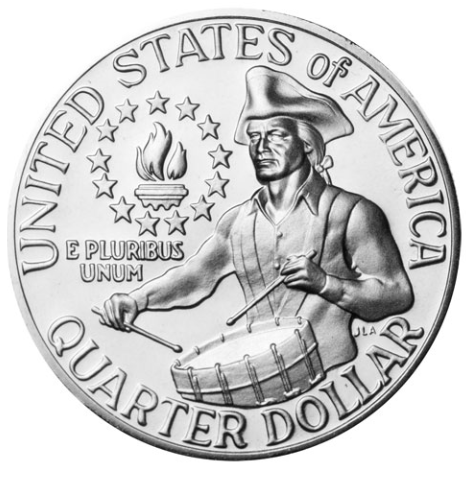
The 1776–1976 Bicentennial quarter is probably the most-saved coin in American history — everyone's grandparents tucked a few away. So here's the honest math up front: with more than 1.6 billion struck between the Philadelphia and Denver mints, a circulated drummer boy quarter is worth 25 to 50 cents. But a few specific versions — the 40% silver San Francisco issues and top-grade survivors — carry real premiums, and they take about ten seconds to identify.
The design everyone remembers
For the Bicentennial, the Mint replaced the eagle reverse on the Washington quarter with a colonial drummer and a victory torch ringed by thirteen stars, and gave every 1975- and 1976-struck quarter the dual date 1776–1976. That's also why no 1975-dated quarters exist — both years of production carry the Bicentennial date.
Value by version
| Issue (mintage) | Circulated | MS-63 | MS-65 | MS-67 |
|---|---|---|---|---|
| 1976 (no mintmark) (809.8M) | Face–$0.50 | $1 | $11 | $100 |
| 1976-D (860.1M) | Face–$0.50 | $1 | $13 | $110 |
| 1976-S 40% silver (11M) | $4+ | $6 | $11 | $26 |
| 1976-S clad proof (7.1M) | — | $5 | $9 | $13 |
| 1976-S silver proof (4M) | — | $6 | $11 | $26 |
Values shown match LuckyCoin's catalog at the time of writing. Click any issue for the full grade-by-grade ladder. Verify with current dealer pricing for any transaction.
How to spot the silver ones
The 40% silver Bicentennial quarters were sold in special collector sets, never released into circulation — but sets get broken up, so they do turn up. Check two things:
- The S mintmark— right of Washington's ponytail on the obverse. No S means no silver, full stop.
- The edge — a silver issue shows a uniform silver-gray edge; a clad quarter shows the familiar copper stripe. (Not every S is silver — San Francisco also struck the clad proofs — so use the edge to split them.)
Our silver coin identification guide covers the same tricks across every denomination.
Where the real money is: condition rarities
Billions minted means gems are ignored — most people saved Bicentennials in drawers, not holders, so genuinely pristine examples are scarcer than the mintage suggests. An MS-67 1976-D catalogs around $110, and finer examples bring multiples of that at auction. If you have rolls from 1976, the ones worth a second look are blazing-fresh coins with no contact marks — see how to grade a coin for what separates MS-63 from MS-67.
Errors worth checking
High-speed presses running billions of coins produced plenty of mistakes: look for doubled dies (especially in ON THE OBVERSE lettering), off-center strikes, and clipped planchets. Our guides to off-center strikes and clipped planchets show what genuine mint errors look like versus post-mint damage.
The same drummer-boy treatment appeared on the Bicentennial Kennedy half dollar and the Eisenhower dollar — if you're sorting an inherited stash, check all three denominations for the dual date.
- Is a 1776–1976 quarter rare?
- No — over 1.6 billion were struck for circulation, the second-highest quarter output of the era. Rarity only enters the picture with the 40% silver collector issues and coins in exceptional uncirculated grades.
- How do I know if my Bicentennial quarter is silver?
- It must have an S mintmark and a solid silver-gray edge with no copper stripe. The silver issues were only sold in collector sets — none were released to circulation.
- Why is there no 1975 quarter?
- Quarters struck during 1975 and 1976 all carry the dual Bicentennial date 1776–1976, so no quarter bears a 1975 date.
- Should I spend my Bicentennial quarters?
- Circulated clad examples are worth face value — spending them costs you nothing. Set aside anything with an S mintmark, a silver edge, or mint-fresh surfaces before you do.