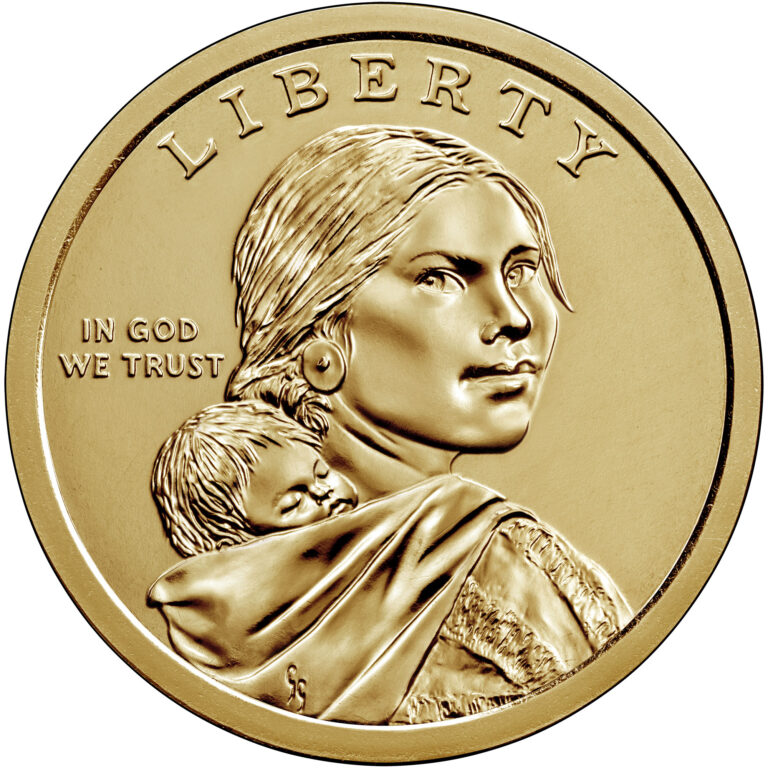
The golden Sacagawea dollar prompts two questions at every coin shop: "is it gold?" and "is it rare?" The answers are no and almost never — it's manganese brass, and three-quarters of a billion were struck in 2000 alone. But hiding inside that first year are two of the most valuable modern US varieties, one of which was literally given away in cereal boxes.
Why it looks gold (and why it tarnishes)
The "golden dollar" is copper wrapped in a manganese-brass layer that starts out bright gold and darkens with handling — a toned, brown-gray Sacagawea is normal, not damaged. There's no precious metal in any circulation issue, so unlike classic dollars there's no melt floor: a worn common date is worth exactly one dollar.
What they're worth
| Issue (mintage) | Circulated | MS-65 |
|---|---|---|
| 2000-P (767.1M) | $1 | $6 |
| 2000-D (518.9M) | $1 | $9 |
| 2000-P Cheerios (~5,500) | $3,200 in MS-65, five figures in top grades | |
| 2000-P Goodacre (5,000) | $500+ in MS-65 | |
| 2002-P (3.9M) | $1–2 | $5 |
| 2008-D (1.8M) | $1–2 | $16 |
Values shown match LuckyCoin's catalog at the time of writing. From 2002 on, circulation strikes were made mostly for rolls and bags rather than commerce — low mintages, small premiums. Verify with current dealer pricing for any transaction.
The Cheerios Dollar
To launch the coin, the Mint dropped 5,500 year-2000 dollars into Cheerios boxes — and those early strikes came from dies with boldly detailed eagle tail feathers on the reverse, showing a raised central shaft and crisp feather detail that regular issues lack. Nobody noticed for five years, by which time most had been spent or eaten… so to speak. A confirmed Cheerios Dollar catalogs at $3,200 in MS-65 and climbs to five figures in top grades. If you have a 2000-P — especially one saved since 2000 — compare the tail feathers against the coin page photos before spending it.
The Goodacre presentation strikes
Sculptor Glenna Goodacre took her $5,000 design fee in dollar coins — 5,000 pieces struck with a special burnished finish just for her. Authenticated Goodacre strikes catalog from about $500 and are usually traded in grading-service holders that trace back to the original distribution.
Other things worth checking
- Wounded Eagle— a die gouge across the eagle's belly on some 2000-P coins; a recognized variety that brings a premium over face.
- Mule error — the famous 2000 Sacagawea/State quarter mule (quarter obverse, dollar reverse) is a six-figure auction coin; a handful exist, but it costs nothing to look.
- 2001–2008 rolls — uncirculated coins from the low-mintage roll years (like 2008-D, 1.8M) carry modest but real premiums in gem grades.
From 2009 the reverse began changing annually as the Native American dollar series — same golden composition, same "spend the worn ones" rule. And if your golden dollar has a different portrait entirely, it's probably a Susan B. Anthony or a Presidential dollar — each has its own value quirks.
- Is a Sacagawea dollar real gold?
- No. It's a copper core wrapped in golden-colored manganese brass. No circulation Sacagawea contains any precious metal, so there's no melt value — just face value plus any collector premium.
- How do I know if I have the Cheerios Dollar?
- It must be a 2000-P with boldly detailed eagle tail feathers on the reverse — a raised central shaft and sharp interior feather lines. Because the difference is subtle and the money is real, candidates should go to PCGS or NGC for attribution.
- Why does my golden dollar look brown?
- Manganese brass tarnishes with handling and humidity. The darkening is normal surface chemistry, not damage — though collectors pay most for coins that kept their original bright finish.
- Are any Sacagawea dollars from 2001–2008 valuable?
- Circulated, no — spend them. Uncirculated examples from the low-mintage roll years (2002 onward) carry small premiums, and gem examples of dates like the 2008-D catalog around $16.