Morgan Silver Dollar Value Chart: The $50 Floor and the Mintmarks Above It
Every Morgan starts around $50 — nearly an ounce of silver in the most collected classic US coin. The chart of key dates, why every CC is a keeper, and how bank-vault hoards scrambled the rarity math.
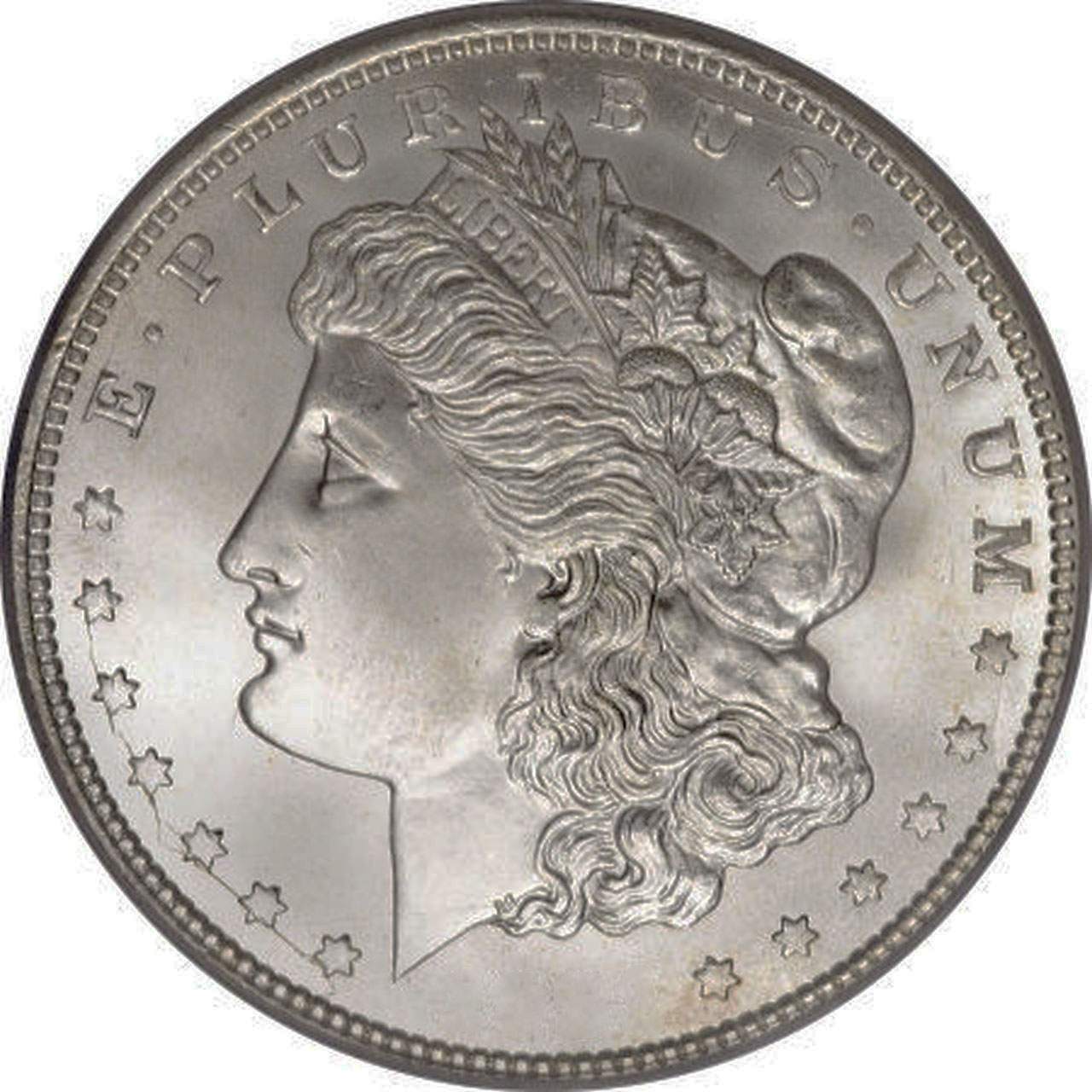
The Morgan silver dollar (1878–1904, plus 1921) is the most collected classic US coin, and its value logic is beautifully simple: every Morgan starts at about $50 in circulated grades — nearly an ounce of silver in a big, historic coin — and the mintmark decides everything above that. Same date, different mint, hundred-fold difference.
The floor, then the ceiling
A common-date Morgan carries 0.7734 oz of silver — about $51.02 of metal at today's spot price — and the catalog's $50 circulated baseline sits on top of it. Every coin page floors its grade values at live melt automatically. Check the mintmark under the wreath on the reverse: nothing (Philadelphia), O (New Orleans), S (San Francisco), D (Denver, 1921 only) — or the two letters that make hearts beat faster, CC (Carson City).
The key dates
| Issue (mintage) | G-4 | F-12 | XF-40 | MS-63 |
|---|---|---|---|---|
| 1893-S (100k) | $3,200 | $5,000 | $13,000 | $320,000 |
| 1889-CC (350k) | $700 | $1,600 | $5,000 | $40,000 |
| 1895 (880 proofs) | The "King of Morgans" — proof-only year, ~$21,000 even worn, $70,000+ in PR-63 | |||
| 1893-O (300k) | $260 | $390 | $900 | $11,000 |
| 1879-CC (756k) | $260 | $600 | $2,400 | $10,000 |
| 1893 (378k) | $160 | $240 | $370 | $2,600 |
Values shown match LuckyCoin's catalog at the time of writing. Click any coin for the full Sheldon ladder, and see the key-dates deep dive for each coin's story. Verify with current dealer pricing for any transaction.
Every CC is a keeper
Carson City struck Morgans in small numbers from Nevada's Comstock silver, and the mint's Wild-West mystique puts a premium on every CC date — the most common (1878-CC) starts around $170 in Good. Many uncirculated CCs survive in the government's GSA hoard holders from the 1970s; a Morgan in a black GSA case is worth more in the case than out of it.
Why some "rare" Morgans are cheap — and some common ones aren't
Millions of Morgans never circulated: they sat in Treasury and bank bags for decades, which is why an 1880s San Francisco coin like the 1881-S is plentiful and gorgeous in mint state. The reverse is also true — the 1901 from Philadelphia is a $50 coin worn but catalogs at $13,000 in MS-63, because almost none were saved fresh. With Morgans, survival in grade beats mintage every time.
1921 is its own story: the design returned for one final year in enormous numbers (44.7M from Philadelphia alone), making it the most common Morgan of all — the perfect $50 starter coin, and usually the one in inherited jewelry boxes.
Watch for counterfeits
Morgans are among the most counterfeited coins in the world, especially key dates and CC issues. Weight (26.73 g), diameter (38.1 mm), and the ring test screen the crude fakes; anything expensive deserves third-party authentication. Our counterfeit guide covers the checks in order.
- How much is a Morgan silver dollar worth today?
- Common dates: about $50 in circulated grades — driven by nearly an ounce of silver plus steady collector demand. Key dates and high-grade examples run from hundreds to six figures; the mintmark and condition decide which coin you have.
- What's the rarest Morgan dollar?
- The 1893-S is the rarest circulation strike (100,000 minted, $3,200 even in Good), and the 1895 "King of Morgans" exists only as ~880 proofs. The 1889-CC is the key of the Carson City run.
- Where is the mintmark on a Morgan dollar?
- On the reverse, below the wreath and above the DO in DOLLAR. No mark means Philadelphia; O, S, CC, and D (1921 only) mark New Orleans, San Francisco, Carson City, and Denver.
- Should I clean a Morgan dollar?
- Never. Original surfaces — even darkly toned ones — are what collectors pay for, and cleaning can cut value by more than half. See why cleaning ruins coins.