Buffalo Nickel Value Chart: Key Dates, Semi-Keys, and the No-Date Question
The hardest classic series to value at a glance — key-date chart with grade columns, the 1913 Type 1 vs Type 2 split, what no-date Buffalos are worth, and the ten-second horn grading check.
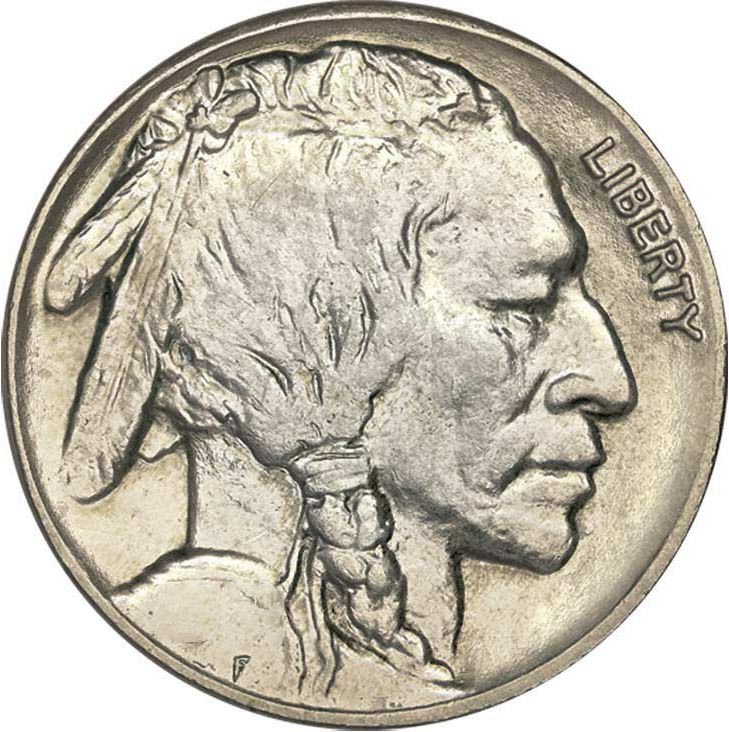
The Buffalo nickel (1913–1938) is the hardest classic US series to value at a glance, because the two things that matter most — the date and the mintmark — are the first things to wear away. This chart covers the dates that carry real money, the honest tier for everything else, and what a no-date Buffalo is actually worth.
The key dates
| Issue (mintage) | G-4 | F-12 | XF-40 | MS-63 |
|---|---|---|---|---|
| 1913-S Type 2 (1.2M) | $340 | $400 | $600 | $1,200 |
| 1914-D (3.9M) | $100 | $140 | $240 | $600 |
| 1921-S (1.6M) | $75 | $130 | $800 | $3,200 |
| 1924-S (1.4M) | $17 | $110 | $1,100 | $6,000 |
| 1926-S (970k) | $23 | $110 | $800 | $10,000 |
| 1937-D 3-Legged | $500 | $700 | $1,000 | $6,000 |
Values shown match LuckyCoin's catalog at the time of writing. Click any coin for the full Sheldon-scale ladder — the 1926-S catalogs at six figures in MS-65. Verify with current dealer pricing for any transaction.
Notice the pattern in the middle columns: mintmarked Buffalos from the early 1920s are cheap in low grades and explosive in high ones. Those San Francisco and Denver issues circulated hard for decades — almost nothing survived crisp — so grade matters more here than in nearly any other US series. Our key-dates deep dive walks each of these coins individually.
Type 1 vs Type 2: the 1913 split
1913 comes in two reverses. Type 1 shows the bison standing on a raised mound with FIVE CENTS on the mound itself — beautiful, but the denomination wore off fast, so the Mint cut the words into a recessed line partway through the year (Type 2). Type 1 is the common, affordable version (about $13 in G-4 from Philadelphia); the 1913-S Type 2 is the series key.
Semi-keys worth pulling
- 1913-D Type 2 — $130 even in Good
- 1914-S — modest circulated, $2,400 in MS-65
- 1924-D and 1926-D — Denver issues that vanish above XF
- 1931-S — just 1.2M struck, but hoarded at release, so only $16 in G-4 — a low-mintage lesson in why survival matters more than mintage
- 1938-D D Over S — the first overmintmark discovered on a US coin; check every 1938-D
What a common Buffalo is worth
Late-date Buffalos (1934–1938) in circulated grades: $1–$5. The 1936 and 1937 Philadelphia issues are the most common of all — over 100 million each — and even they reach $80 in MS-65, because nobody saved nickels in the Depression.
No-date Buffalos
Decades of circulation wore the raised date off millions of Buffalos — a dateless example is worth roughly fifty cents as a novelty. Acid date-restorers (Nic-A-Date) can make the date readable again, which is worth doing on a coin that might be a 1921-S or 1926-S: an acid-restored key still sells for a meaningful fraction of a problem-free one, while a restored common stays a fifty-cent coin. Just know the acid mark is permanent — never use it on a coin with a visible date, and see why cleaning destroys value before touching anything questionable.
Grading a Buffalo in ten seconds
The bison's horn is the classic marker: barely-there horn means Good, a partial horn means Very Good, and a full visible horn puts you around Fine or better — with sharpness in the tail and the fur above the shoulder separating VF from XF. Our grading guide covers the full scale, and every coin page links grade-by-grade values so you can see exactly what one grade step is worth.
- What's the most valuable Buffalo nickel?
- Among regular issues, the 1926-S in gem condition — it catalogs around $10,000 in MS-63 and six figures in MS-65. The 1937-D 3-Legged error and the 1913-S Type 2 are the famous ones most collectors hunt.
- Is a Buffalo nickel with no date worth anything?
- About fifty cents. The exceptions are dateless coins restored with date-revealing acid that turn out to be key dates — a restored 1926-S still carries real value, though far less than an unrestored example.
- Where is the mintmark on a Buffalo nickel?
- On the reverse, centered under the words FIVE CENTS. No mintmark means Philadelphia; D is Denver, S is San Francisco.
- How do I know if my 1937-D is the 3-Legged variety?
- The bison's front right leg is missing from the hoof up — but the hoof itself is still there, floating below the body. Beware coins with a leg ground off; on the genuine error, die polishing removed the leg but left the hoof, and PCGS/NGC authentication is standard for any sale.