Copper Penny Melt Value Calculator
Enter the quantity of pre-1982 Lincoln cents and other copper coinage to get an instant melt value at current copper spot. Includes Indian Head cents, two-cent pieces, large cents, half cents, and pre-1997 Canadian pennies.
| Coin | Quantity | Copper (oz) | Melt value |
|---|---|---|---|
Pre-1982 Lincoln centWheat 1909–1958 + Memorial 1959–1982 (excludes 1943 steel). 95% Cu, 3.11 g. | 0.095 | $0.0436 | |
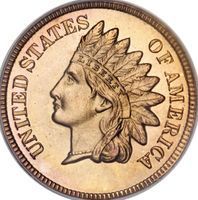
Indian Head cent (bronze)1864–1909, 95% Cu / 5% tin-zinc, 3.11 g | 0.095 | $0.0436 | |
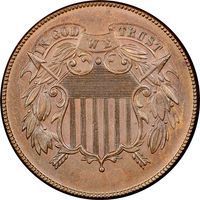
Two-cent piece1864–1873, 95% Cu / 5% tin-zinc, 6.22 g | 0.19 | $0.0872 | |
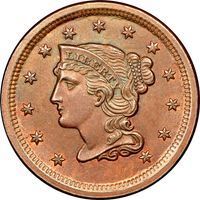
Large cent1793–1857, ~100% pure copper, 10.89 g (1815+) — Coronet, Braided Hair, etc. | 0.3501 | $0.1608 | |
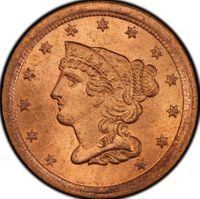
Half cent1793–1857, 100% pure copper, 5.44 g | 0.1749 | $0.0803 | |
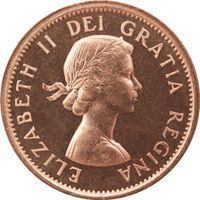
Canadian cent (pre-1997)Small cent 1920–1996, 95–98% Cu, 3.24 g | 0.099 | $0.0454 | |
| Total | — | 1.004 oz | $0.4610 |
%2FLincoln%20(Wheat%20Reverse)_200x200.jpg?alt=media&token=b12e85d9-0004-4ce3-92c9-8ca12a58101a)
Skip the math — LuckyCoin tracks the live melt value of your whole collection automatically, free.


How this calculator works
Each coin's pure copper content is computed from its weight and fineness, converted to troy ounces. Multiply by the current copper spot price for the melt value — the raw worth of the metal in the coin, before any collector premium.
Per-coin copper content used here: pre-1982 Lincoln cents and Indian Head bronze cents at 0.0950 troy oz; two-cent pieces at 0.1900 oz; large cents at 0.3501 oz; half cents at 0.1749 oz; pre-1997 Canadian cents at 0.0990 oz. The override box on the spot card lets you model future scenarios — try entering $0.50 (per oz) to see what copper hitting $7.30/lb would do to your stack.
The pre-1982 copper penny stacking phenomenon
Pre-1982 Lincoln cents are the most-stacked copper coin in the world. At a $0.01 face value but ~$0.029 in copper content at recent spot prices, every roll of bronze cents you hold is roughly three times its face value in raw metal. This drove the Mint to switch to copper-plated zinc in mid-1982 and led to the 2006 Treasury regulation banning the actual melting of US cents and nickels (with criminal penalties up to $10,000 and 5 years). Stackers nevertheless accumulate them, betting that when the cent is eventually discontinued — already authorized for 2025 — the melting ban will be repealed.
See the US penny discontinuation guide for the latest on what happens to circulating cents.
Frequently Asked Questions
- How much copper is in a pre-1982 Lincoln cent?
- Pre-1982 Lincoln cents (Wheat 1909–1958 and Memorial 1959–1982, excluding the 1943 steel cent) are 95% copper and 5% tin-zinc, weighing 3.11 grams. That works out to about 2.95 grams of pure copper per coin, or roughly 0.095 troy ounces. Mid-1982 was the changeover — earlier 1982 cents are bronze, later ones are copper-plated zinc.
- Why are pre-1982 cents worth more than face value as scrap copper?
- A pre-1982 Lincoln cent costs $0.01 of face value but contains nearly $0.025–$0.030 of copper at recent spot prices — roughly two and a half to three times face value. The premium has existed since the early 2000s, which is why the Mint switched to copper-plated zinc in 1982. As of mid-2006, US Treasury regulations make it illegal to melt pennies and nickels for their metal content, with limited exceptions for collectors and travelers.
- Is it legal to melt copper pennies?
- No. Since December 14, 2006, US Treasury regulations (31 CFR Part 82) prohibit melting US one-cent and five-cent coins for their metal content, with criminal penalties up to $10,000 in fines and 5 years in prison. The regulation was issued because rising copper and nickel prices made the coins worth more melted than as currency. People still legally hoard pre-1982 cents as a long-term store of value, betting that the law will be repealed when the cent itself is discontinued.
- How can I tell if a 1982 Lincoln cent is bronze or zinc?
- Weigh it. Bronze cents weigh 3.11 grams; copper-plated zinc cents weigh 2.50 grams. A digital kitchen scale that measures to 0.1 g or 0.01 g is enough. You can also test with a strong magnet (neither sticks, but density and ring help) or by drop-test (bronze has a higher pitch). Both 1982 P and 1982 D varieties exist in both compositions, so date alone doesn't tell you.
- What about pre-1997 Canadian pennies?
- Canadian small cents from 1920–1996 are 95–98% copper, weighing 3.24 grams (0.099 troy oz of copper per coin — slightly more than a US cent). Royal Canadian Mint switched to copper-plated zinc in 1997 and to copper-plated steel in 2000. Like US pre-1982 cents, pre-1997 Canadian cents trade at a premium to face value as scrap copper. Canada eliminated the cent from circulation entirely in 2013.
- How is melt value different from collector value?
- Melt value is just the copper content × spot price. Collector value is what someone will pay above melt — driven by date, mintmark, condition, and rarity. For common-date Wheat cents and Memorial cents in worn grades, the two are similar (most trade close to copper melt). For key dates (1909-S V.D.B., 1914-D, 1922 plain, 1955 doubled die) collector value far exceeds melt — by hundreds or thousands of dollars in nicer grades.